LONGEVITY & HEALTHY AGING · MEMPHIS, TN
Longevity & Healthy Aging in Memphis: A Practical Guide to Staying Strong, Lean, and Capable for Life
Longevity isn’t about chasing trends or trying to look 25 forever. It’s about building a strong, resilient body and a clear, focused mind so you can fully live the next 20–40 years — play with your kids and grandkids, keep doing the work you love, and stay independent and capable here in Memphis and across the Mid-South.
At Fit 901, we coach everyday people, high performers, and tactical professionals to age stronger — not just by “working out more,” but by combining strength training, metabolic health, nutrition, recovery, mindset, and real-world lifestyle design. This page is your no-nonsense guide to longevity and healthy aging, and how our coaching-driven environment in Midtown Memphis can support you long term.
Prefer to start slow? Explore our Longevity coaching options and see how we tailor training and lifestyle to your age, goals, and current health status.
Most clients come to us balancing careers, families, and old injuries — and still build strength, lose fat, and feel more capable decade by decade.
If you’re asking questions like:
- How do I stay strong and mobile into my 50s, 60s, and beyond?
- What’s the smartest way to train for longevity — not just aesthetics?
- How do I keep muscle, lose fat, and protect my joints?
- What role do nutrition, sleep, and stress really play?
- When should I consider physician-led support like medications or peptides?
You’re in the right place. Let’s walk through what actually matters for healthy aging — and how we implement it with real people every day at Fit 901.
Why Longevity & Healthy Aging Matter More Than Ever
We’re living longer, but we’re not necessarily living better. In the U.S., rates of obesity, type 2 diabetes, and cardiovascular disease climb with age. Many people in their 40s, 50s, and 60s feel like their energy, mobility, and strength are slipping away — even if they’re “doing what they’ve always done.”
Research published in journals such as The Lancet , JAMA , and the New England Journal of Medicine consistently shows that maintaining muscle mass, strength, and cardiorespiratory fitness is strongly associated with lower risk of early death, disability, and chronic disease. Resistance training and physical activity aren’t just “nice to have” — they’re core health interventions for aging well.
In practical terms, healthy aging is about preserving three big things:
- Muscle and strength — so you can move well, lift, carry, climb, and catch yourself if you trip.
- Metabolic health — blood sugar, blood pressure, body composition, and inflammation under control.
- Brain and emotional health — clear thinking, emotional resilience, and a sense of purpose.
In Memphis, we also see the realities of long work hours, shift work, stress, and limited time. Many of our clients are business owners, healthcare workers, law enforcement, firefighters, and busy parents. You don’t need a perfect lifestyle to age well — you need a smart, realistic plan and consistent coaching to execute it.
Quick snapshot: why this matters now
• We’re living longer than previous generations — but spending more years dealing with pain, medications, and limitations.
• Strength, muscle, and cardiorespiratory fitness are among the most powerful predictors of healthy years lived.
• A well-designed training and lifestyle plan in your 30s–60s can dramatically change how you feel in your 70s and 80s.
Why is healthy aging so hard for most people?
If you feel like you’re doing “okay” but not really winning the long game of health, you’re not alone. The obstacles you’re facing are built into modern life:
- Sedentary work and long commutes.
- Highly processed, hyper-palatable food everywhere you go.
- Stress from work, family, and finances.
- Poor sleep routines and screen time late into the night.
- Conflicting fitness and nutrition advice every time you open your phone.
On top of that, natural age-related changes like gradual loss of muscle (sarcopenia), slower recovery, hormonal shifts, and joint wear-and-tear can make it feel like the deck is stacked against you. But “natural” doesn’t mean “uncontrollable.” The evidence is clear: people in their 40s, 50s, 60s, and beyond can build muscle, gain strength, improve metabolic markers, and meaningfully reduce risk of many age-related diseases with the right plan and support.
What do most people get wrong about longevity?
Most of the common approaches we see in Memphis (and online) work against healthy aging:
- Crash dieting that strips away muscle along with fat.
- Endless cardio with no resistance training plan.
- Random group classes with no progression or long-term strategy.
- “Band-aid” approaches — supplements, detoxes, or hacks with no real behavior change.
- Ignoring sleep, stress, and recovery while trying to “outwork” a worn-down system.
These strategies might move the scale in the short term, but they usually cost you muscle, performance, and energy — the exact things you need to age well. They’re also very hard to maintain around real life, travel, work, and family demands.
Longevity is not about doing something extreme for 6–12 weeks. It’s about building a system you can sustain for years — one that fits your schedule, your joints, your preferences, and your goals. That’s exactly what we design with clients inside our Transformation Program and Longevity coaching options.
What actually works for longevity and healthy aging?
If you strip away trends and look at the highest-quality research from organizations like the American College of Sports Medicine, the National Institutes of Health, and major medical journals, a clear pattern emerges. Healthy aging is built on a few core pillars, executed consistently and adjusted to your life stage and health status.
1. Strength training as a non‑negotiable
Progressive resistance training 2–4 times per week is one of the most powerful tools you have for longevity. Multiple studies show it supports:
- Maintaining and building muscle mass.
- Improving bone density and joint stability.
- Enhancing insulin sensitivity and metabolic health.
- Reducing fall risk and injury risk.
- Improving confidence and quality of life.
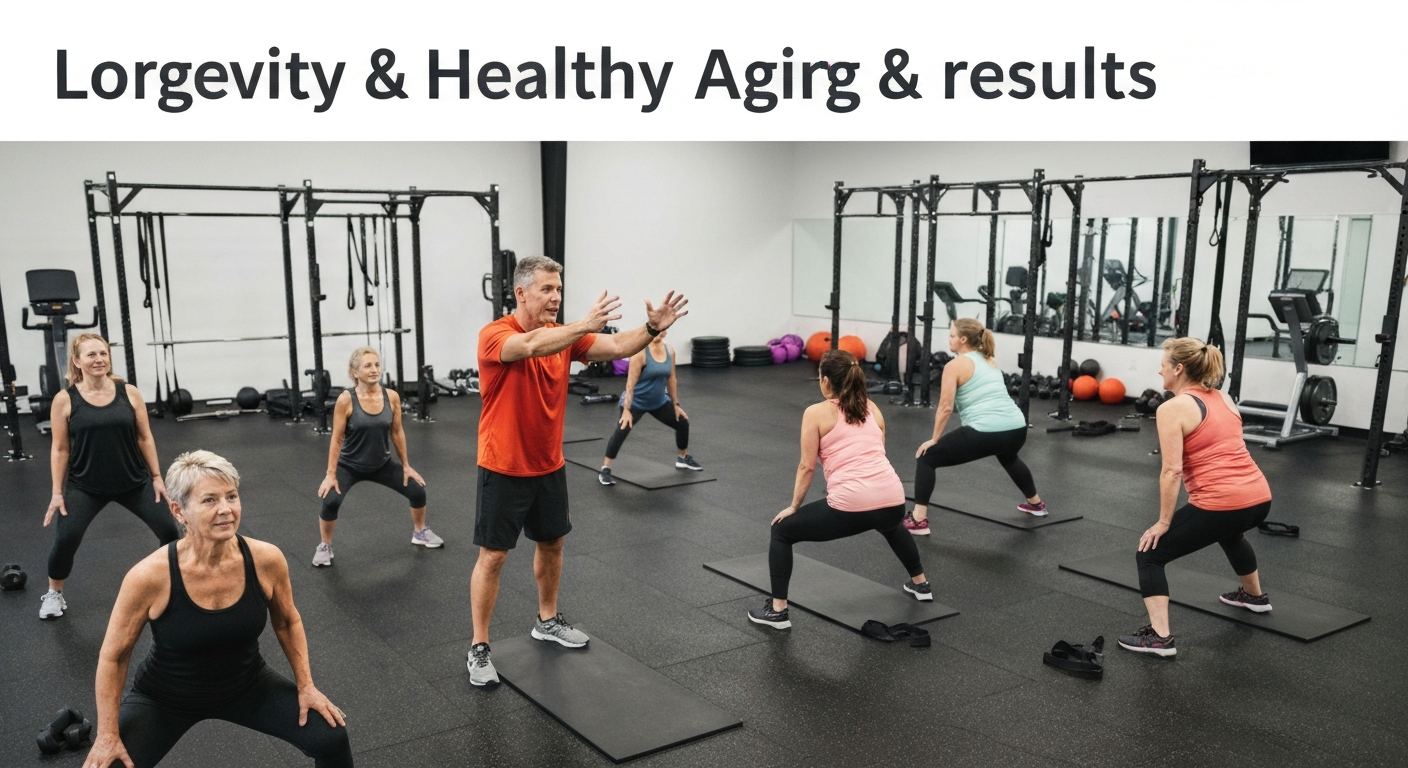
Done correctly, you don’t have to “wreck yourself” in the gym. You need structured, repeatable sessions with smart exercise selection, appropriate loading, and built-in progressions. That’s the backbone of our personal training and group training programs at Fit 901.
2. Metabolic health and body composition over “weight loss”
The scale doesn’t tell you how much of your weight is muscle, fat, bone, or water. For longevity, what matters most is preserving lean mass while reducing excess visceral fat and improving blood markers like fasting glucose, A1c, and blood pressure.
That’s where habit-based nutrition coaching , strength training, and realistic activity targets come together. For some clients with significant metabolic issues, physician-led support through medical weight loss programs can be appropriate — especially when other attempts have failed.
In those cases, licensed physicians — not Fit 901 coaches — handle evaluation, prescribing, dosing, and medical monitoring. Our role is to build the training, nutrition, and habit systems so any medical support is effective, safe, and used as a tool instead of a crutch.
3. Recovery, sleep, and stress management
Muscle and fitness gains don’t happen in the gym; they happen when you recover from what you do in the gym. Poor sleep, chronic stress, and never taking a real break can blunt progress and accelerate burnout.
We coach clients on simple, evidence-informed strategies for:
- Improving sleep routines and sleep hygiene.
- Structuring training weeks to match your life stress.
- Using active recovery, mobility, and walking strategically.
- Building realistic “me-time” that doesn’t derail your goals.
4. Mindset, habits, and lifestyle design
Longevity isn’t about discipline alone. It’s about building a lifestyle that makes the right choices easier, not harder. That’s why we coach:
- Time and goal management.
- Productivity and focus strategies.
- Environment design (home, work, food environment).
- Habit stacking and realistic progression.
- Mindfulness and stress-resilient thinking.
Our coaching goes beyond sets and reps. We help you design the life you actually want to live, then align your training, nutrition, and routines with that vision.
5. Strategic medical and recovery support when appropriate
For some clients — especially those with significant metabolic issues, chronic pain, or recovery limitations — physician-led support can be helpful. This can include medications, GLP‑1–based therapies, or peptide protocols managed by licensed providers through independent medical partners.
At Fit 901, physicians — not coaches — handle all evaluation, prescribing, dosing, and medical monitoring. Our role is coaching, training, accountability, nutrition guidance, and lifestyle support so that tools like physician-led medical weight loss support or peptide-supported recovery are used responsibly and effectively as part of a complete plan.
How Fit 901 approaches longevity and healthy aging
We’re not a commercial gym where you’re left on your own. Fit 901 is a coaching-driven environment. Every decision we make — from exercise selection to how we structure your week — is anchored in two questions:
- Will this help you get stronger, healthier, and more capable over the next 5–10 years?
- Can you realistically sustain this with your current life, responsibilities, and stress?
Your first phase: assessment and clarity
We start by understanding where you are and where you want to go — strength levels, movement quality, medical history, schedule, stress load, and priorities. From there we outline a clear, staged plan for your first 6–12 months, and how that fits into your bigger 3–5 year vision for your health and life.
What a typical week might look like
For many longevity-focused clients in Memphis, a sustainable starting point is:
- 2–3 coached strength sessions per week (personal or small group).
- Daily walking target (often 6,000–8,000 steps to start, adjusted per person).
- A simple, protein-forward nutrition framework built around your food preferences.
- 1–2 short “micro-sessions” for mobility or core work at home.
- Sleep, stress, and habit goals set at a realistic level for your schedule.
Some clients train with us in-studio in Midtown Memphis. Others work primarily online through our online coaching program and check in remotely while training in their home or local gym.
Which Fit 901 services support longevity and healthy aging?
Longevity isn’t a single program — it’s a lens we apply to everything we do. Depending on your goals, training history, medical status, and schedule, we’ll guide you toward the right mix of coaching and support.
Strength and performance foundation
If your main priority is building or maintaining strength, mobility, and performance:
