

Note: This article was originally published when our gym was CrossFit 901. We’ve since transitioned away from CrossFit affiliation after 15+ years (early 2026) and now operate as Fit 901 — same coaches, same Memphis Midtown gym, evolved offering. The content below remains relevant; brand references have been updated.
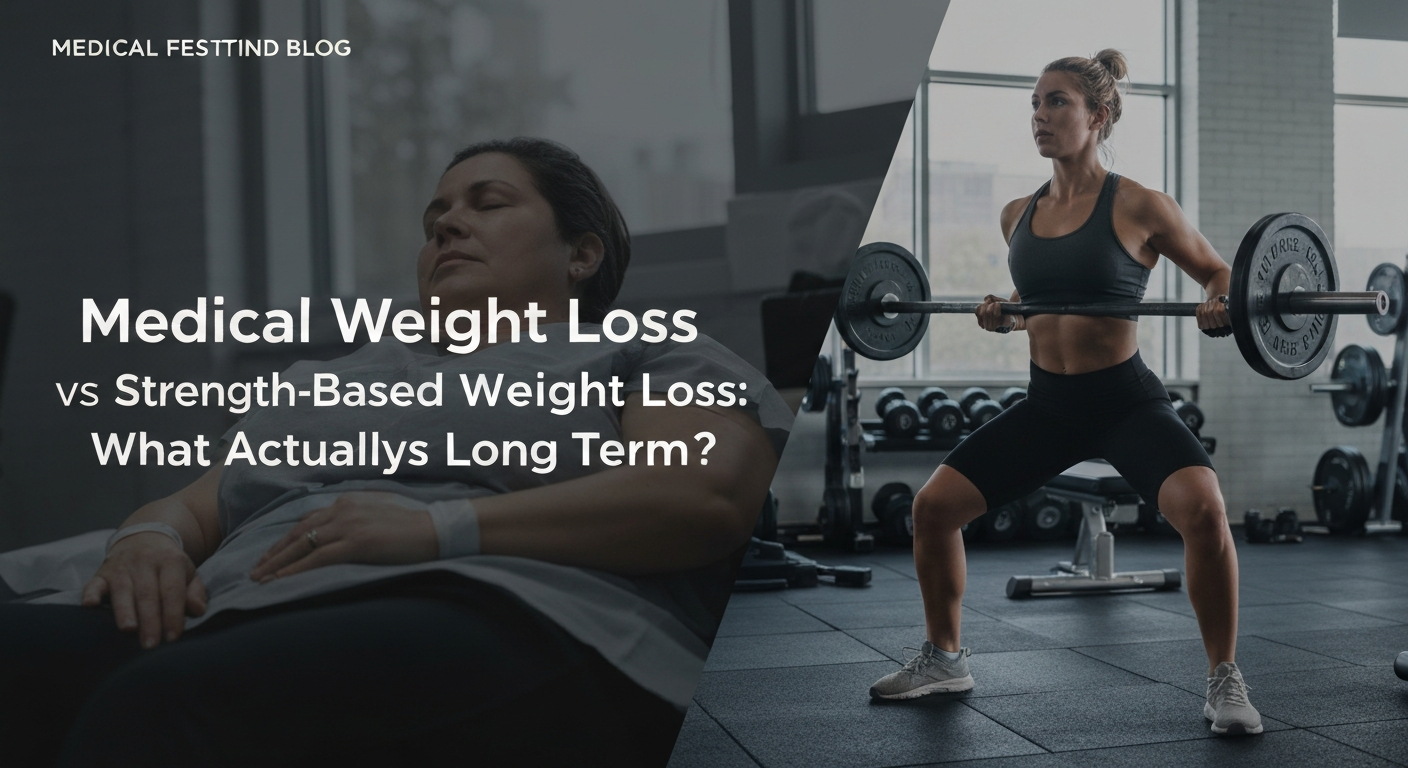
Medical Weight Loss vs. Strength-Based Weight Loss: What Actually Works Long Term?
The journey to sustainable weight loss is often fraught with confusion, frustration, and a bewildering array of options. From trendy diets promising rapid results to medical interventions and rigorous fitness regimens, it can be challenging to discern what truly delivers lasting change. At Fit 901, we understand this struggle. Today, we’re diving deep into two prominent approaches: medical weight loss and strength-based weight loss, examining their mechanisms, benefits, drawbacks, and ultimately, what path leads to long-term success.
For many, weight loss isn’t just about aesthetics; it’s about reclaiming health, boosting energy, and improving overall quality of life. But which strategy offers the most robust foundation for a healthier future?
Understanding Medical Weight Loss
Medical weight loss refers to a physician-supervised program designed to help individuals lose weight and improve their health. It’s typically recommended for those with significant weight-related health issues or a high Body Mass Index (BMI).
How It Works
These programs often involve a multi-faceted approach, which may include:
- Prescription Medications: Drugs like GLP-1 receptor agonists (e.g., Ozempic, Wegovy, Saxenda), appetite suppressants, or fat absorption inhibitors are prescribed to help manage hunger, cravings, and metabolism.
- Structured Diet Plans: Often very low-calorie diets (VLCDs) or meal replacements are used under medical supervision.
- Behavioral Counseling: Guidance on lifestyle changes, eating habits, and physical activity.
- Regular Medical Monitoring: Frequent check-ups to assess progress, manage side effects, and adjust treatment.
The Upsides
- Rapid Initial Results: Medications can significantly reduce appetite, leading to quicker weight loss in the short term, which can be highly motivating.
- Addresses Medical Conditions: For individuals with obesity-related comorbidities like type 2 diabetes or heart disease, medical supervision can directly address these issues.
- Expert Oversight: Constant monitoring by healthcare professionals ensures safety and adjustments as needed.
- Accountability: Regular appointments can provide a strong sense of accountability.
The Downsides
- Potential Side Effects: Medications can have side effects, ranging from nausea and digestive issues to more serious complications.
- Cost: Many medical weight loss programs and medications can be expensive and may not always be fully covered by insurance.
- Sustainability Concerns: The weight loss achieved can sometimes be difficult to maintain once medications are discontinued, as the underlying habits may not have been fully transformed.
- Dependency: There can be a psychological or physiological dependency on medication for weight management.
Understanding Strength-Based Weight Loss
Strength-based weight loss, as championed by Fit 901, focuses on resistance training – lifting weights, using resistance bands, or bodyweight exercises – as a primary tool for body recomposition and overall health improvement. It’s often combined with a balanced, nutrient-dense nutrition plan.
How It Works
This approach isn’t just about burning calories; it’s about fundamentally changing your body’s physiology:
- Muscle Building: Resistance training stimulates muscle protein synthesis, leading to increased muscle mass. Muscle is metabolically active tissue, meaning it burns more calories at rest than fat.
- Boosted Metabolism: A higher muscle mass directly translates to a higher Basal Metabolic Rate (BMR), meaning you burn more calories even when you’re not exercising.
- Fat Loss: While the scale might not drop as quickly as with medical interventions due to muscle gain, strength training is highly effective at reducing body fat.
- Improved Body Composition: You’ll not only lose fat but also gain lean muscle, leading to a more toned, strong, and functional physique.
- Hormonal Benefits: Regular strength training can improve insulin sensitivity and optimize other hormones crucial for weight management.
- Enhanced Bone Density: A significant long-term health benefit, especially as we age.
The Upsides
- Sustainable & Empowering: Builds healthy habits for life, fostering a sense of accomplishment and self-efficacy. You learn to fuel and move your body optimally.
- Long-Term Body Recomposition: Focuses on changing your body’s fundamental structure, leading to lasting improvements in metabolism and appearance.
- Overall Health Benefits: Beyond weight loss, it improves strength, mobility, balance, cardiovascular health, and mental well-being.
- No Side Effects (When Done Correctly): Free from the pharmaceutical side effects, and when guided by professionals like those at Fit 901, the risk of injury is minimized.
- Cost-Effective Long-Term: While initial training might be an investment, the skills and habits learned are lifelong.
The Downsides
- Slower Initial Scale Movement: Because you’re gaining muscle while losing fat, the number on the scale might not drop dramatically or quickly, which can be discouraging for some.
- Requires Consistency and Effort: Building muscle takes time, dedication, and consistent effort.
- Learning Curve: Proper form and programming are crucial to avoid injury and maximize results, often requiring professional guidance initially.
The Core Question: What Actually Works Long Term?
When we talk about “long term,” we’re talking about more than just shedding pounds; we’re talking about maintaining that loss, improving health markers, and sustaining a vibrant, active lifestyle for years to come.
Medical weight loss can be incredibly effective for rapid initial weight loss, especially for individuals with significant health risks or those needing a powerful “kickstart.” However, the challenge often arises when treatment ends. Without having built sustainable habits around nutrition, exercise, and stress management, the weight can often return, sometimes even surpassing the initial weight (the “rebound effect”). The focus is often on the medication’s effect rather than the individual’s intrinsic ability to manage their health.
Strength-based weight loss, on the other hand, is a marathon, not a sprint. While the initial scale changes might be slower, the changes happening within your body are profound and foundational. By building muscle, you’re investing in a higher metabolism that works for you 24/7. You’re developing discipline, resilience, and a deeper understanding of how your body responds to movement and nutrition. This approach fosters independence and equips you with the tools to manage your weight and health autonomously, for life.
The key differentiator for long-term success lies in habit formation and physiological adaptation. Strength training fundamentally changes your body’s composition and metabolic machinery, making it inherently more efficient at managing weight. It also empowers you with a sense of control and capability that extends far beyond the gym.
The Synergy: Can They Work Together?
It’s important to note that these two approaches are not always mutually exclusive. For some individuals, particularly those with very high BMIs or significant metabolic challenges, medical weight loss can serve as an invaluable tool to initiate weight loss, reduce immediate health risks, and create a window of opportunity to begin adopting healthier lifestyle habits.
However, even in these cases, the long-term success hinges on integrating sustainable lifestyle changes. This is where strength training becomes indispensable. If medical intervention gets the ball rolling, strength training, combined with balanced nutrition and other healthy habits, is what keeps it rolling indefinitely. It helps preserve muscle mass during calorie deficits (which is crucial, as rapid weight loss can often lead to muscle loss), and it builds the metabolic engine needed for sustained weight management once medications are reduced or stopped.
Fit 901’s Perspective: Your Path to Lasting Change
At Fit 901, we firmly believe that true, lasting weight loss and optimal health stem from empowering you with the knowledge and tools to transform your body from the inside out. While we acknowledge the role medical interventions can play for specific individuals, our core philosophy centers on strength-based training as the most potent, sustainable, and empowering pathway to long-term success.
We focus on:
- Building Lean Muscle: To boost your metabolism and sculpt a stronger physique.
- Strategic Nutrition: Guiding you on how to fuel your body for performance and fat loss without deprivation.
- Habit Formation: Helping you integrate sustainable practices into your daily life.
- Holistic Well-being: Addressing sleep, stress, and overall lifestyle factors crucial for health.
We don’t just help you lose weight; we help you build a stronger, healthier, more resilient you – a person equipped with the power to maintain their results for a lifetime.
Conclusion
While medical weight loss offers a powerful initial push, especially for those facing significant health hurdles, strength-based weight loss stands out as the champion for long-term efficacy. It addresses the root causes of weight management challenges by transforming your body’s metabolism and fostering sustainable habits. At Fit 901, we’re dedicated to guiding you on this empowering journey, helping you discover what truly works for a lifetime of health and vitality. Ready to build a stronger you? Connect with us today.
Ready to See What’s Possible?
Whether you’re starting with our 9-week transformation, joining a CrossFit class, or beginning physician-led medical weight loss, the path begins the same way: a real conversation with our team.
Tell us where you are and where you want to be — we’ll personally call you within 24 hours to talk through which Fit 901 path fits your goals.
About the Author
Rob Yahn is the owner and head coach of Fit 901 in Memphis. A 32-year firefighter and paramedic, USAW-certified weightlifting coach, and CrossFit Level 2 Trainer, Rob has spent over two decades coaching real Memphians through real transformations. Save 901-657-4552 in your phone — that’s the Fit 901 line.